date
photos
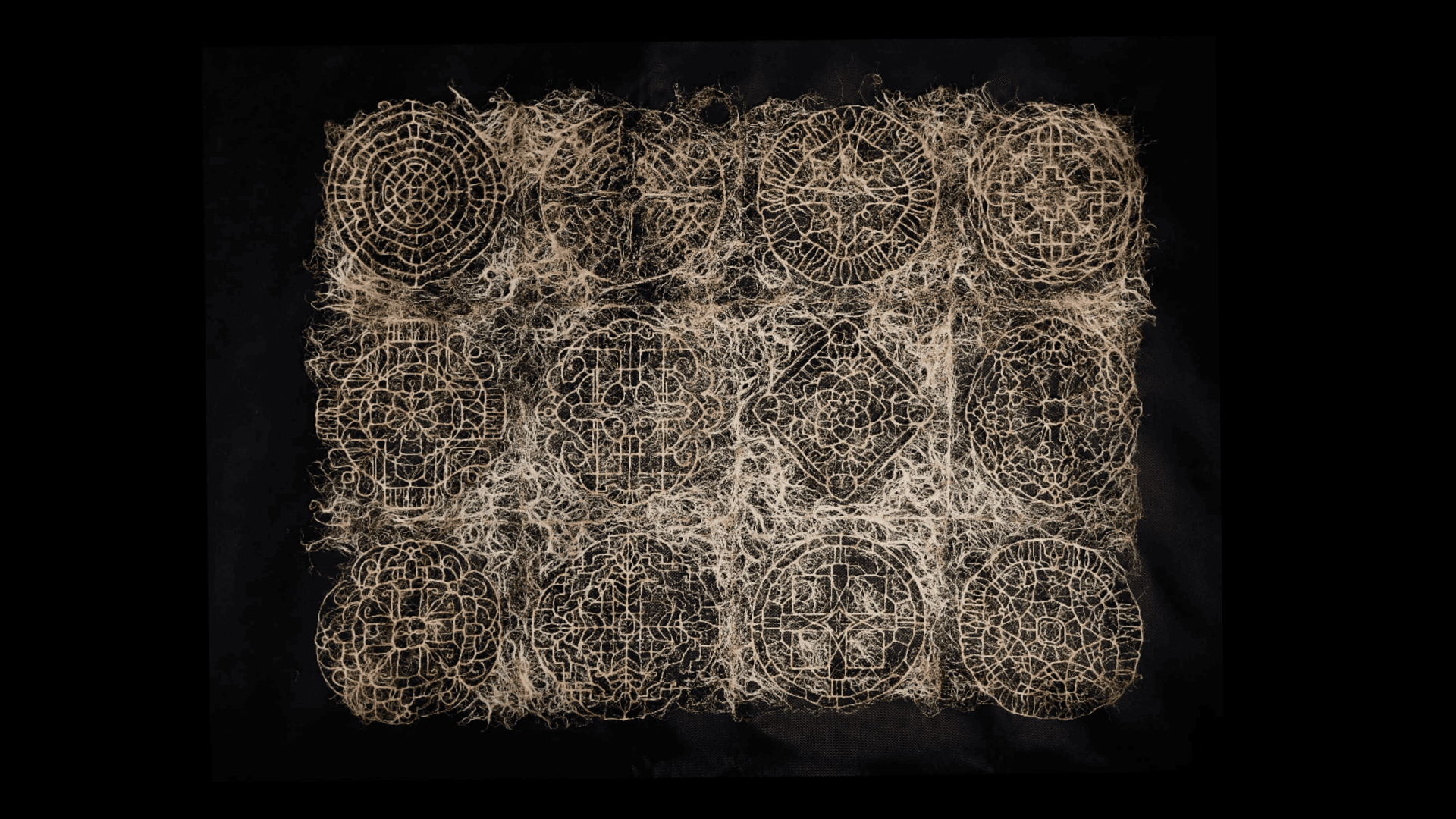
Timeless encounter, Ornella Ostapenko
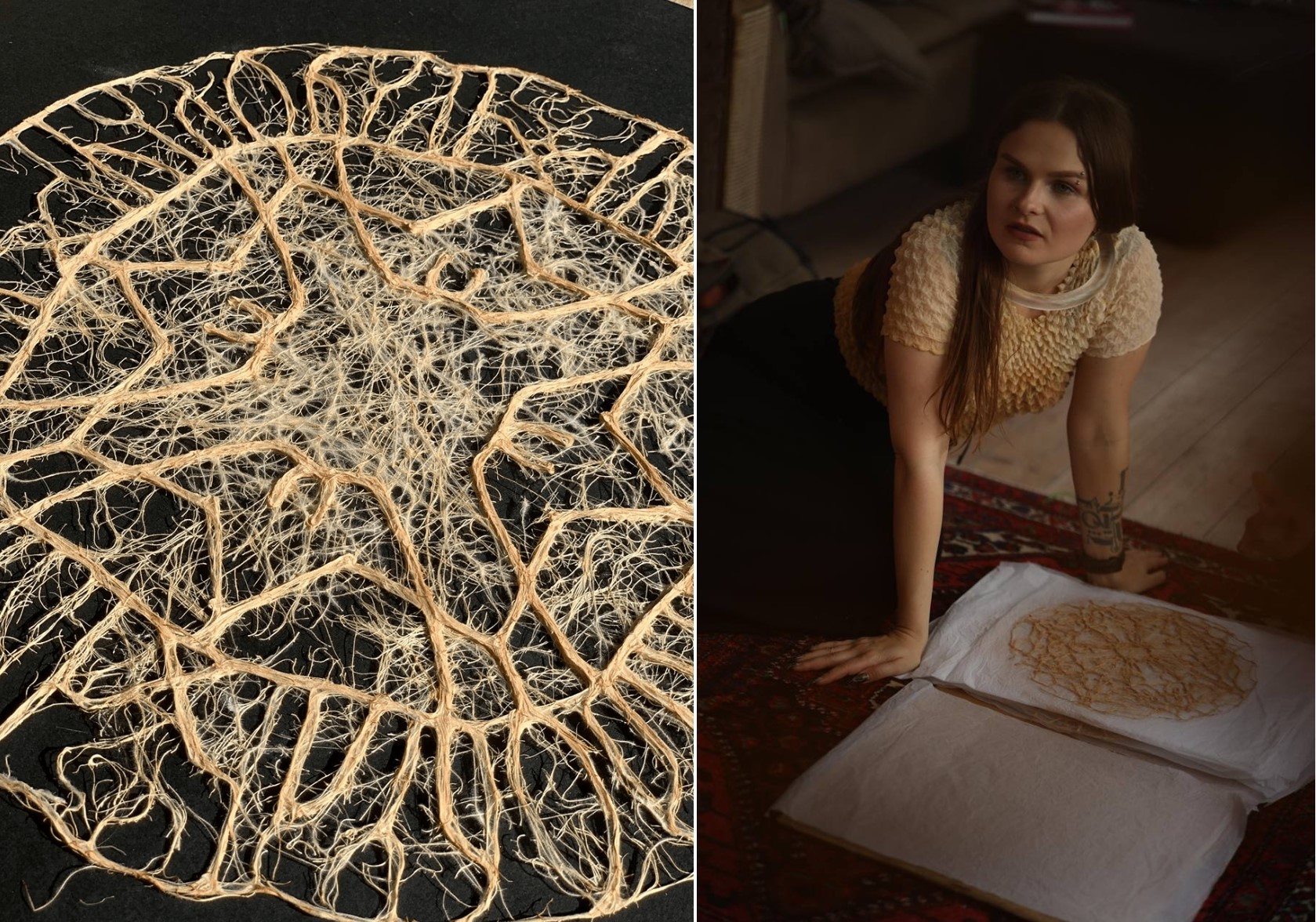
roots tapestry in the technique of Diana Bilichenko (Rizome)
PROJECT CONTEXT
The globalization of the twentieth century produced both hope for a universal architecture of peace and fear of cultural homogenization. Neither vision fully materialized. Instead, the contemporary world is marked by fragile political systems, large-scale displacement, ecological crisis, and renewed struggles over identity. Within this context, national and personal identities are not dissolving, but reorganizing under pressure.
RESEARCH FRAMEWORK
The war against Ukraine has forced more than 10 million people to leave their homes — the largest population displacement of the 21st century. Each displaced person carries fragments of Ukrainian culture into new cultural, religious, and social environments, encountering the “other” on a daily basis.
Such encounters often generate fear — particularly in societies shaped by memories of previous wars and hybrid conflicts — yet they also activate processes of cultural transformation. Like celestial bodies colliding, cultures do not simply replace one another; they generate new formations. This tension between enrichment and conflict forms the conceptual core of the project.
HISTORICAL & ARCHITECTURAL RESEARCH
The research underpinning Timeless Encounter identifies twelve essential encounters in Ukrainian history — moments in which Ukrainian culture intersected with other civilizations, belief systems, and architectural traditions.
Ukraine’s geography places it at the crossroads of the Orthodox, Catholic, and Islamic worlds. Each of these encounters represents a historical moment where architecture functioned as a site of negotiation between cultures. These moments are understood simultaneously as points of cultural collision, sources of enrichment for world culture, and structural foundations of contemporary Ukrainian identity. They belong equally to Ukraine and to a shared European and global cultural history.
VISUAL TRANSLATION
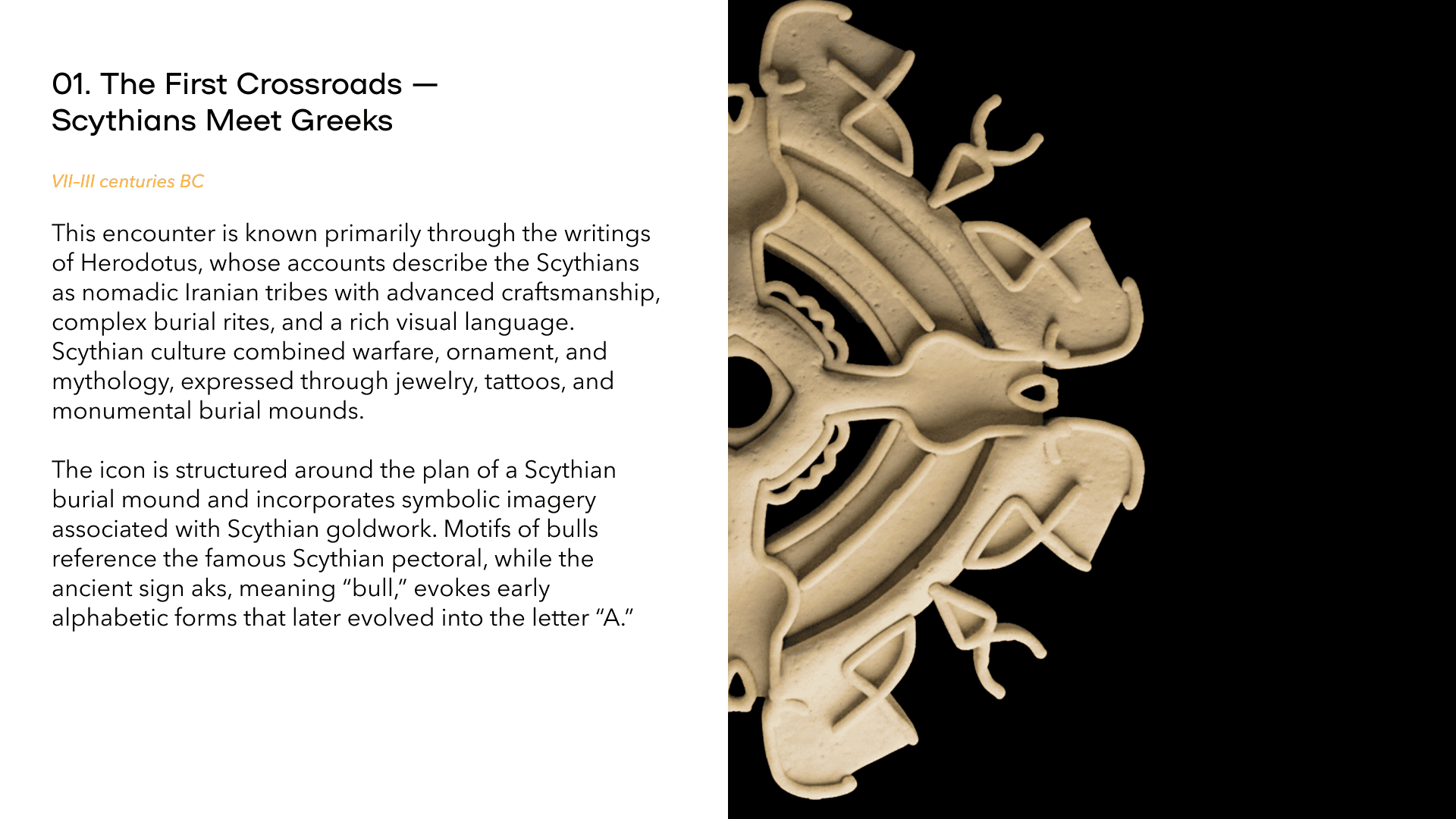
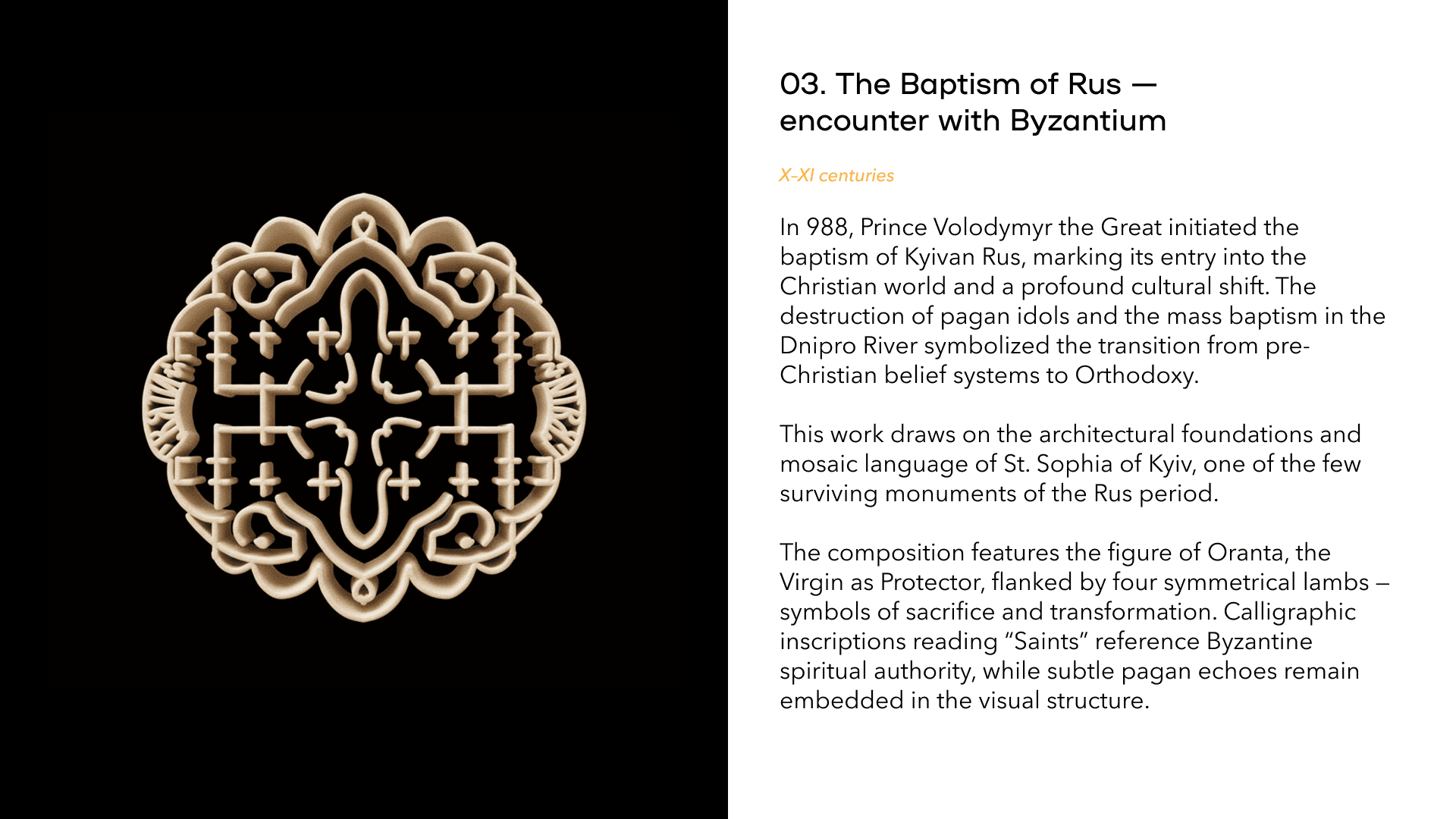
The research outcomes are translated into twelve graphic icons.
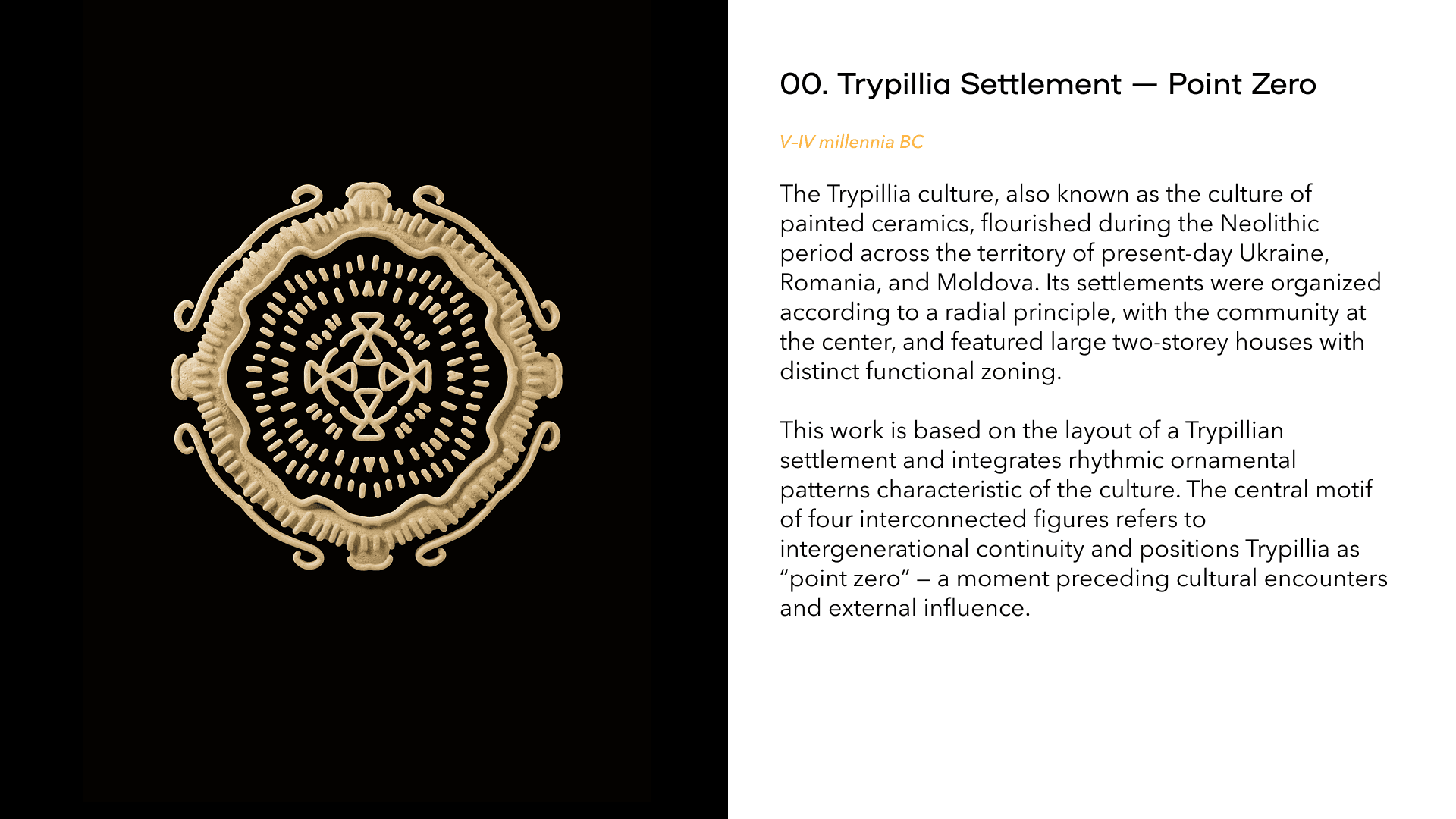
Each of the twelve works is based on a drawing of the foundation plan of a sacred or historically significant building representative of a specific period. This architectural base is layered with characteristic visual symbols of the era, including iconography, spiritual imagery, calligraphy, and ornamental patterns.
Architecture functions as a structural carrier of memory, while graphic layers act as cultural sediment — recording how identity is constructed, transformed, and preserved over time.